
Choosing a Dentist in Hauppauge: What a Multi-Specialty Practice Changes
Choosing a dentist on Long Island is not hard until it is. For a cleaning, almost any well-reviewed practice within a reasonable drive will do fine, and picking the one closest to your house or your office in Hauppauge is a perfectly sensible way to decide.
The choice starts to matter when the work gets bigger. A tooth that cannot be saved, an implant, a full-arch restoration, gum disease that has gone past a routine cleaning, a child who cannot tolerate treatment awake, a medically complex patient who needs anesthesia. That is when the structure of a practice, rather than its distance from your driveway, starts deciding how your year goes.
Here is what to look for, and what a multi-specialty practice genuinely changes about the experience.
The referral problem
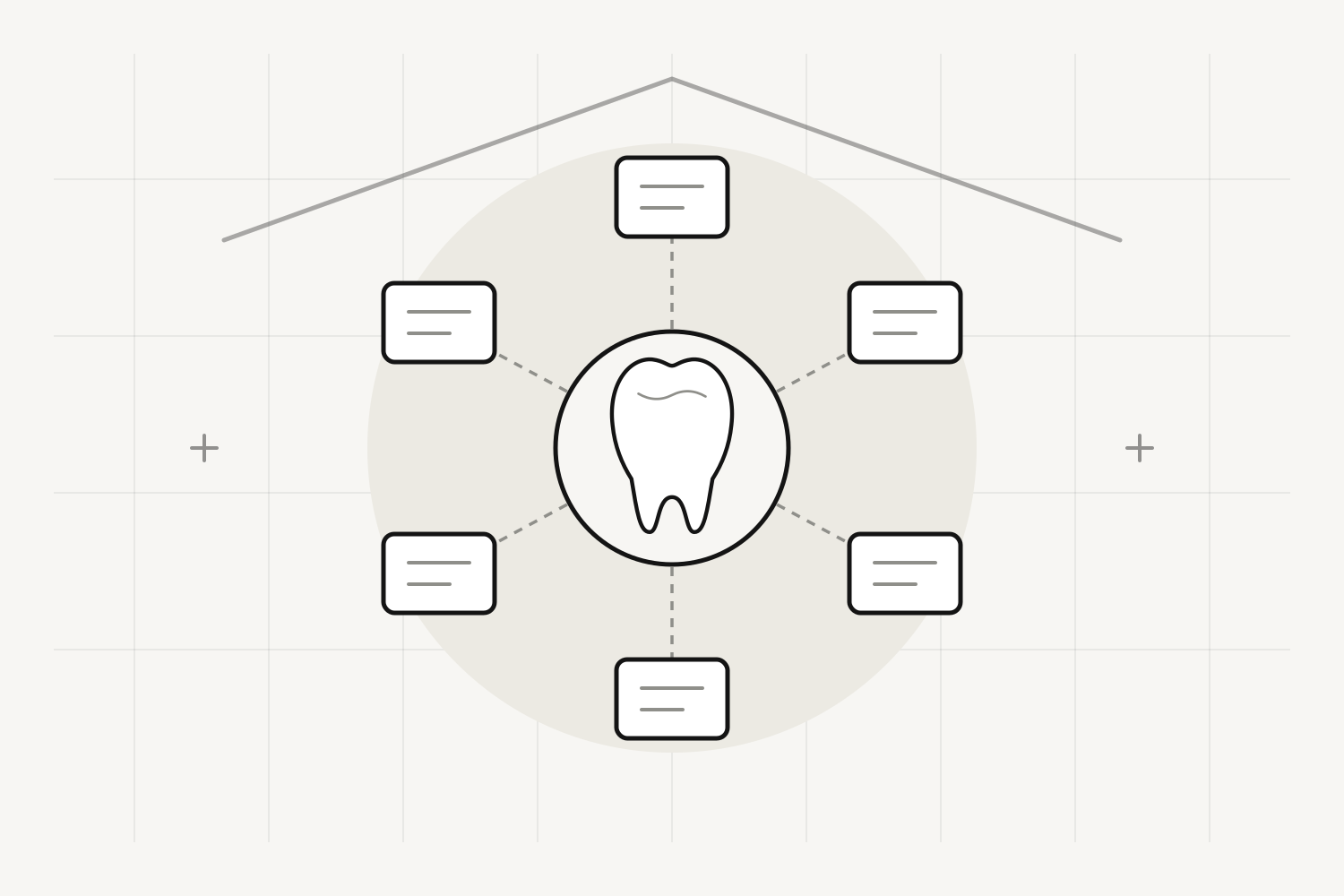
In the conventional model, a general dentist is your dental home and sends you out for anything specialized. A periodontist for the gums, an oral surgeon for the extraction and implant placement, a prosthodontist for the final restoration, a separate facility for anesthesia, and an outside laboratory that fabricates the crown and mails it back.
Every one of those handoffs is a place for the plan to lose something. You repeat your history at each office. Records get requested, faxed, and occasionally never arrive. Each practice has its own scheduling backlog, so a plan that takes six months clinically stretches to a year because you spent eight weeks waiting for the next available consultation. Most importantly, nobody owns the whole plan. The surgeon places the implant where the bone is best; the restorative dentist later discovers that is not where the tooth should be. Both did competent work. The result still is not right.
None of that is a criticism of specialists working in separate offices, which is how most excellent dentistry in Suffolk County gets done. It is a description of the friction, and the friction is real. For a single crown, it is barely noticeable. For a full-mouth rehabilitation, it is the difference between one coordinated plan and five separate opinions you are expected to reconcile yourself.
What multi-specialty actually means
The phrase gets used loosely, so it is worth defining. A genuinely multi-specialty practice has the specialists themselves under one roof, treating the same patients, planning together, and sharing one record and one set of images.
At our Hauppauge campus that means general and restorative dentistry, cosmetic dentistry, periodontics, prosthodontics, pediatric and special needs dentistry, and oral and maxillofacial surgery all in the same building at 400 Townline Road. Dr. Lynn Pierri, Suffolk County’s first female oral surgeon, built it that way deliberately after four decades of watching complex cases fragment across offices.
What changes in practice is unglamorous and enormously useful. One set of X-rays and scans, taken once, read by everyone. One treatment plan that the surgeon and the restorative dentist agreed on before anything was placed, so the implant goes where the final tooth needs it. One coordinated schedule, which frequently means combining procedures into a single appointment rather than three. One team that knows your medical history, your anxiety level, and your preferences, because it is written in the same chart they all read.
There is also a quieter benefit: the conversation in the hallway. When the person doing your gum treatment can walk twenty feet and ask the person planning your implant what they need, questions get resolved in a minute instead of a letter.
The pieces worth asking about specifically
Anesthesia and sedation on site. This is the capability that separates practices most sharply and the one people ask about least. Nitrous oxide and oral sedation are widely available. IV sedation and general anesthesia delivered by board-certified MD anesthesiologists, with recovery nurses monitoring afterward, are not. That level of care is unusual outside a hospital, and it is what makes treatment possible for patients with severe dental phobia, complex medical histories, special healthcare needs, or children who cannot safely be treated awake. We provide it here, and we are building out a dedicated maxillofacial ambulatory surgery suite on the same campus to expand it.
An in-house dental laboratory. Most crowns, bridges, and dentures are designed and manufactured hundreds of miles from the patient by a technician who will never see their face. Our laboratory is in the building, running digital scanning, CAD/CAM design, 3D printing, and facial scanning. That collapses the usual two-week wait to a single visit for many restorations, and it means shade matching happens with you sitting there in daylight rather than by mailing a color tab across the country. For full-arch cases, having surgery and prosthetics under one roof is not a convenience, it is the whole workflow.
A practice that teaches. Our Destination Forum runs courses, live surgery, and hands-on labs for dental and medical professionals. Teaching is worth asking about wherever you go, because a practice that teaches has to keep current, and continuing education is the difference between dentistry as practiced in the year the dentist graduated and dentistry as practiced now.
Genuine family range. A practice that treats a two-year-old, a nervous adult who has avoided care for twenty years, and a grandparent needing a full-arch restoration means the whole household goes to the same place. That sounds like a scheduling nicety. In reality, it is how dental problems get caught early, because the family that shares one practice actually goes.
Questions to ask any dental practice on Long Island
Whether you choose us or not, these are the questions that predict how the next year of your care will go.
Ask what happens if you need a specialist, and whether they refer out or handle it internally. Ask who plans the case when surgery and restoration are both involved, and whether those two people ever speak directly. Ask what sedation options exist and who administers them, by credential, not by reassurance. Ask where the crown is made and how long it takes. Ask how emergencies are handled and whether a real person answers after hours. Ask what the plan costs in total, in writing, before it starts, and what happens if something is found mid-treatment that changes it.
Then read the reviews with a specific eye. Ignore the star average and read the negative ones. What people complain about tells you far more about how a practice runs than what people praise.
Starting the conversation
Our first visit is designed to answer these questions rather than to begin treatment. We examine, take the images we need, and talk through what we find. If it has been years since your last visit, the length of the gap does not matter to us and it should not embarrass you. If you are anxious, say so when you book, so we can schedule the extra time before you arrive.
Whether you are looking for a family dentist in Hauppauge, a second opinion on a complex plan, or a practice that can handle implants, gum treatment, and the final restoration without sending you across Suffolk County, call us at (631) 360-0266 or request an appointment online. We are at 400 Townline Road, Suite 135, Hauppauge, NY, and the whole campus is in one building.
More from the journal
Book your visit.
New patients, families, and referrals are always welcome.