
Receding Gums: Why They Happen, and When You Need a Gum Graft
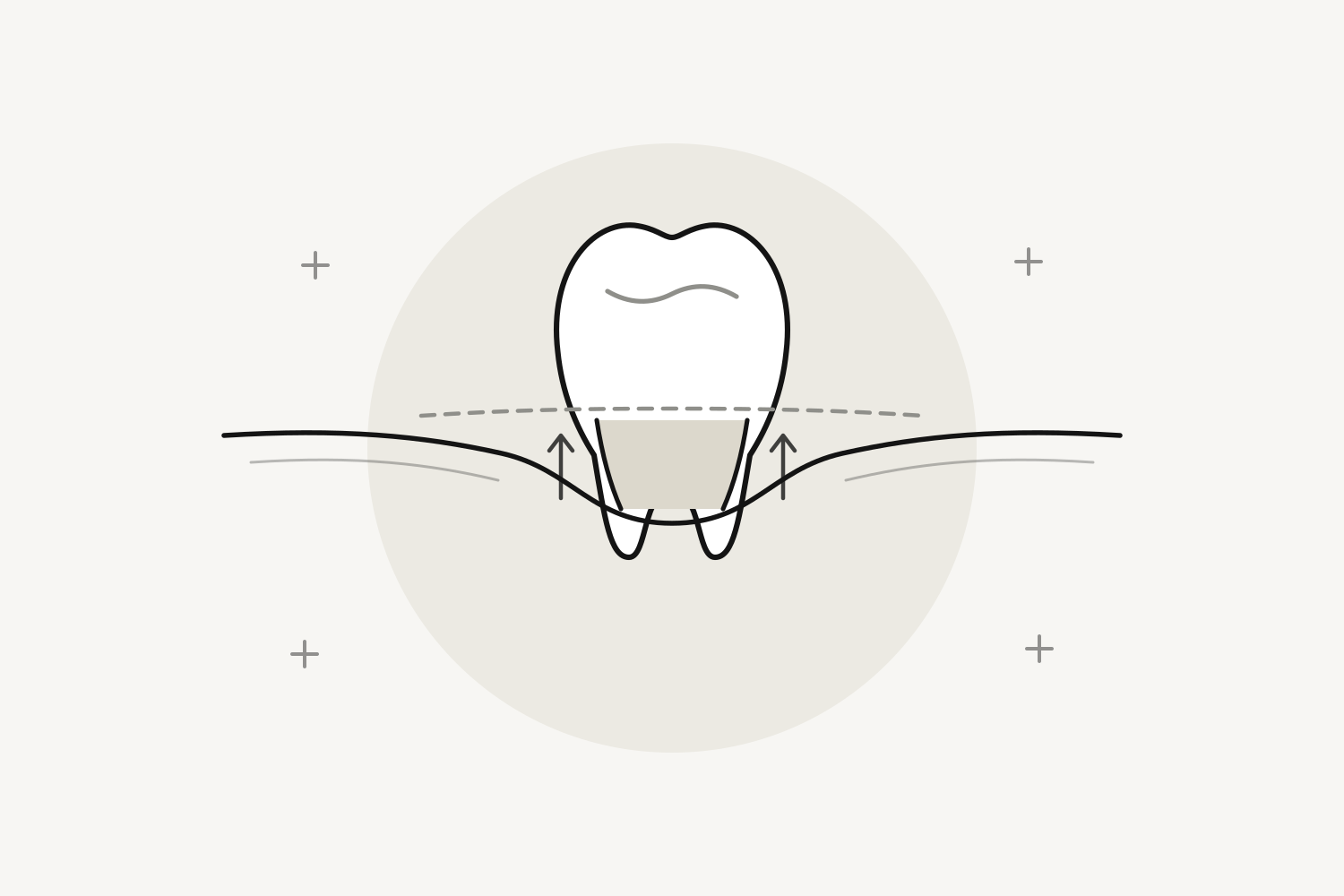
Almost nobody notices gum recession starting. It happens over years, a fraction of a millimeter at a time, and the first hint is usually not the gums at all. It is a jolt of sensitivity from cold water, or a toothbrush catching on a rough ridge that was not there before, or a tooth that suddenly looks longer than the one next to it in a photograph.
Gum recession matters more than its cosmetic appearance suggests. The gum line is a seal. When it pulls back, it exposes root surface that was never designed to be exposed, and root surface has no enamel on it. That means it decays faster, wears faster, and hurts more than the crown of the tooth ever did. Left alone, recession keeps going, and the bone underneath usually goes with it.
Here is what causes it, what can be done about it, and where gum grafting fits in the picture at our periodontal practice in Hauppauge.
What gum recession actually is
Your tooth is anchored by two things: the bone that holds the root, and the gum tissue that seals over the top of that bone. Recession is what you see when both move down the root together. The gum is the visible half of the story; the bone loss underneath is the half that decides how serious it is.
That is why the treatment question is never just “can we cover this back up?” It is “why is the foundation shrinking, and has that stopped?” Cover an active problem and it keeps working underneath the repair.
Why gums recede
Periodontal disease is the most common cause. Bacterial plaque hardens into calculus below the gum line, the body responds with chronic inflammation, and the inflammation dissolves the bone and tissue that hold the tooth. It is painless for a long time, which is exactly what makes it dangerous. It is also the leading cause of adult tooth loss in the United States.
Aggressive brushing is the second most common, and the most frustrating, because these are people trying hard to do the right thing. A hard-bristled brush, scrubbed side to side with real pressure, abrades gum tissue and wears a notch into the root at the gum line. If your toothbrush bristles splay outward within a month, you are pushing too hard. Soft bristles and a gentle circular motion clean better anyway. An electric brush with a pressure sensor removes the guesswork entirely.
Grinding and clenching contribute more than most people expect. The repeated lateral force flexes the tooth at the neck and stresses the tissue and bone around it. Recession that appears on one side of the mouth, on the teeth you happen to grind hardest, is often a bite problem that will keep undoing any cosmetic repair until the grinding is addressed with a night guard.
Then there are the causes you cannot do much about. Thin gum tissue is genetic, and some people simply have less of it to lose. Teeth positioned outside the arch sit with very little bone on the cheek side to begin with. Orthodontic movement, lip and tongue piercings that rub, and smoking all raise the risk. Smoking is worth singling out, because it both accelerates the damage and hides it: nicotine constricts blood vessels, so smokers’ gums often stop bleeding, which removes the earliest warning sign while the disease continues.
The signs worth acting on
Healthy gums do not bleed. That is the single most useful sentence in this article. Bleeding when you brush or floss is not a sign you brushed too hard, it is the earliest and most reversible signal of gum inflammation.
Alongside it, watch for teeth that look longer than they used to, a yellower band appearing near the gum line, a notch you can feel with a fingernail, persistent bad breath, gums that look puffy or dusky rather than firm and pink, sensitivity to cold or to sweet things, and any tooth that feels even slightly mobile. Mobility is late-stage. Do not wait for it.
How gum recession is treated
Treatment scales with the cause and how far it has gone.
Behavior first, always. If aggressive brushing is doing the damage, changing technique costs nothing and stops the progression. If grinding is doing it, a night guard does. No surgical result survives an unchanged cause, which is why this comes first rather than last.
Scaling and root planing. Where gum disease is the driver, the calculus below the gum line has to come out. This is a deep cleaning that goes beneath the tissue and smooths the root surface so the gums can reattach, usually done in sections with local anesthetic and followed by a check to measure whether the pockets have tightened. For a great many patients this is the entire treatment.
Laser therapy. In appropriate cases, laser treatment can reduce bacteria in deep pockets and remove diseased tissue with less bleeding and a gentler recovery than traditional surgery. It is an adjunct that makes non-surgical periodontal treatment more effective, not a replacement for the cleaning underneath it.
Gum grafting. When enough tissue is gone that the root is exposed, sensitive, decaying, or continuing to lose ground, a graft replaces the tissue. Donor tissue, usually taken from the palate or from a processed tissue graft, is secured over the exposed root, where it takes on a new blood supply and becomes part of the gum. It covers the root, stops the sensitivity, protects against root decay, thickens tissue that was too thin to hold, and restores the appearance of a normal gum line.
Recovery is more comfortable than most people brace for. Expect soreness and swelling for a few days, a soft-food diet for a week or two, and instructions not to brush the site while it heals. The palate donor area is usually the part patients notice most, and it settles within a couple of weeks.
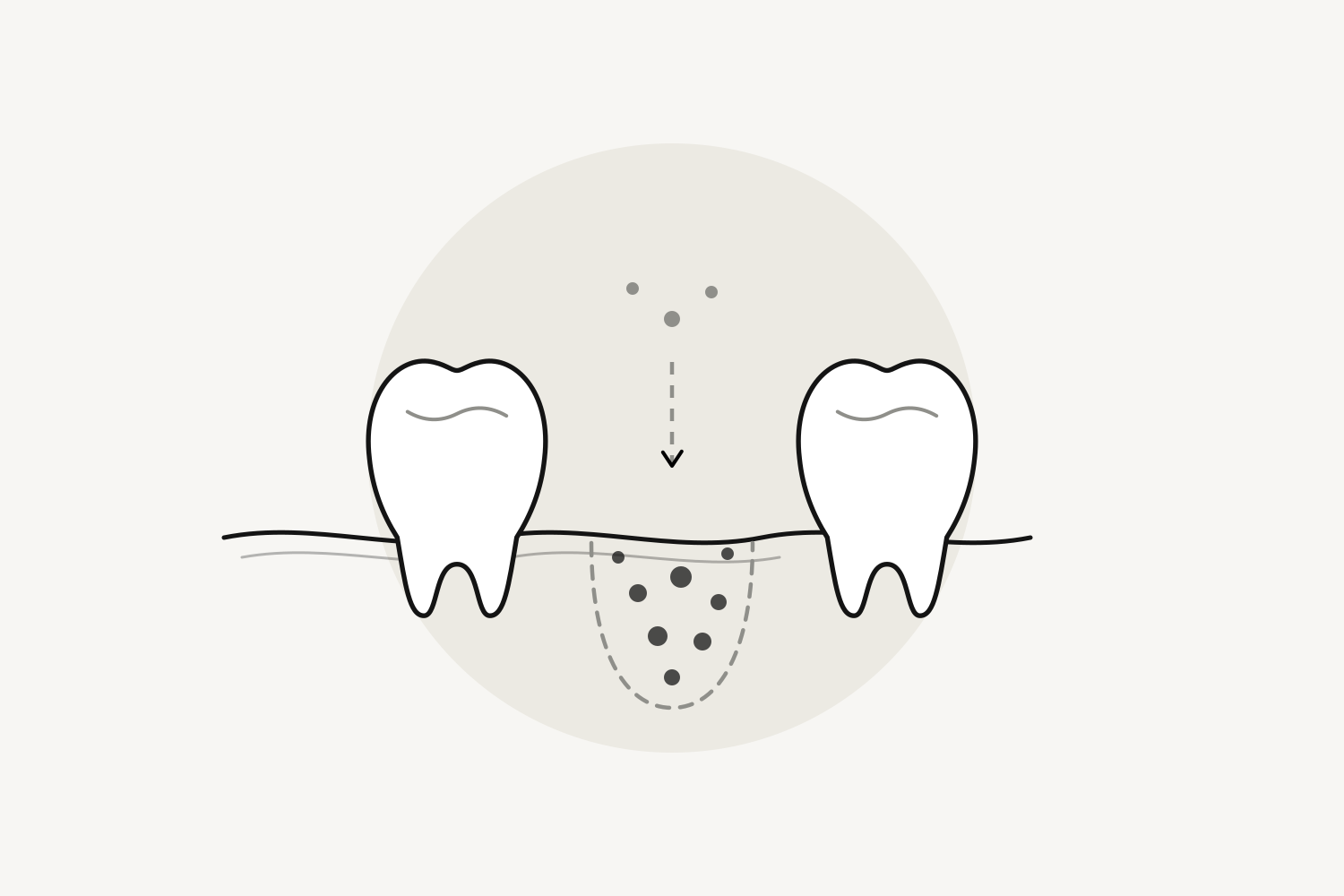
Bone grafting, where the bone loss underneath is significant, sometimes accompanies periodontal work, particularly when a dental implant is planned for that site later. The bone is the foundation, and implants need a foundation.
Why periodontal health decides what else is possible
Everything else in dentistry stands on top of gum and bone. Implants need bone to integrate with and healthy tissue to seal against. Crowns and veneers need a stable, healthy gum margin or the edges show and the seal fails. A full-arch restoration is a foundation project before it is a cosmetic one.
That is why our periodontal team works alongside our surgeons, prosthodontists, and restorative dentists on the same plan rather than in sequence across three different offices. When gum treatment, implant placement, and the final restoration are all planned in one building, the timing works out and nobody is waiting on a referral letter.
Do not wait for it to hurt
Gum recession is largely painless until the exposed root makes itself known, and by then tissue is already gone that will not return by itself. Caught at the bleeding-gums stage, it is usually reversible with a cleaning and a change of technique. Caught later, it is treatable but more involved.
If your gums bleed, your teeth look longer, or cold drinks have started to sting, that is the moment to have it looked at rather than the moment to wait and see. Call us at (631) 360-0266 or request an appointment online, and we will measure exactly where things stand at our Hauppauge office and tell you plainly whether it needs treatment or watching.
More from the journal
Book your visit.
New patients, families, and referrals are always welcome.