
What Happens If You Don't Replace a Missing Tooth?
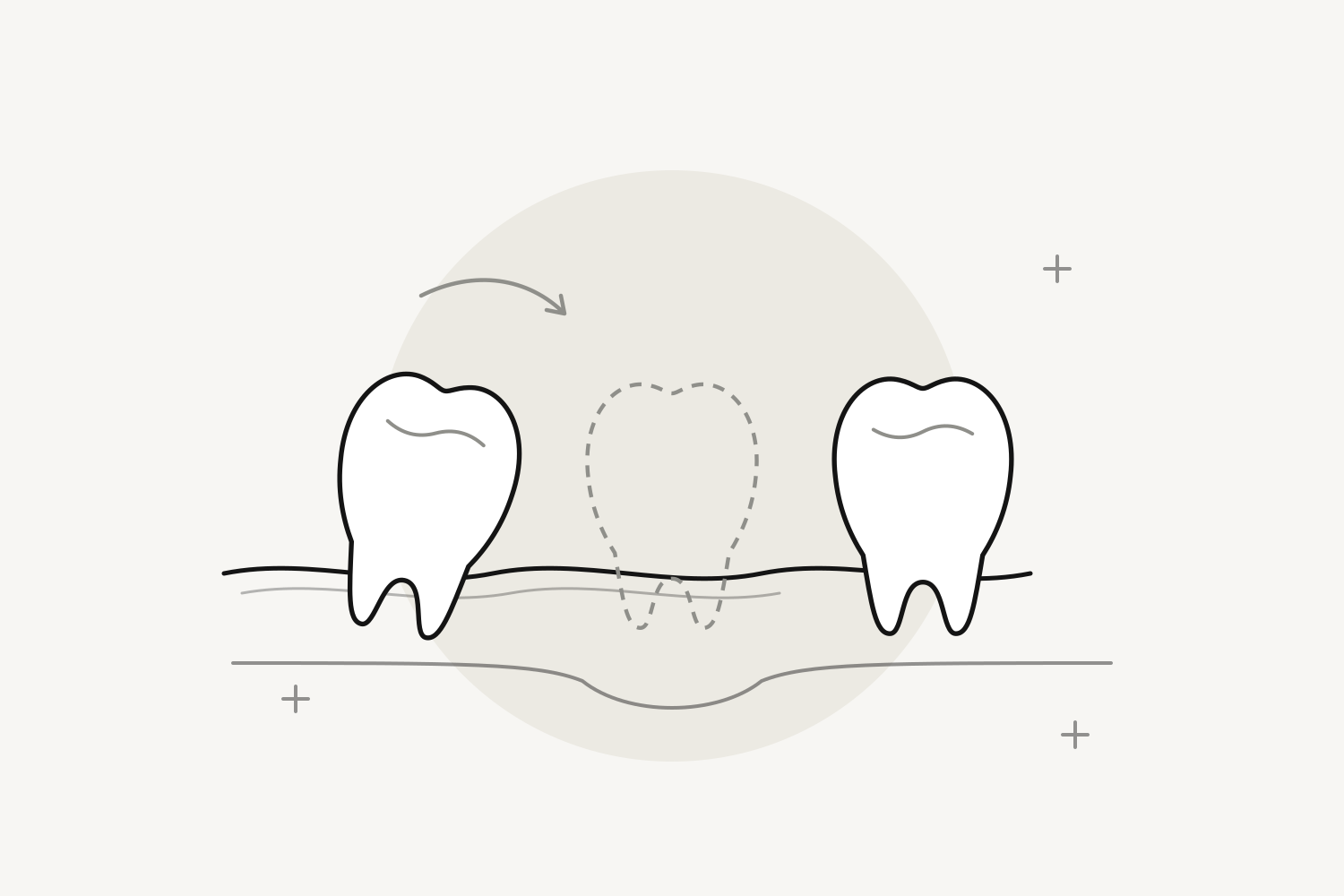
Losing a back tooth often feels like a small thing. Nobody can see the gap, chewing on the other side becomes a habit, and life goes on. For a while, that is genuinely fine.
What is easy to miss is that a gap is not static. Over months and years, the bone and teeth around it slowly change, and those changes affect what replacing the tooth involves when you are ready. This article explains what happens and why timing matters.
The jawbone starts to shrink
The bone that holds a tooth is maintained by the tooth itself. Every time you chew, the root transmits force into the bone, and the bone keeps itself strong in response. When the tooth is gone, that signal stops, and the bone in that spot gradually resorbs, becoming both narrower and shorter.
Bone loss is fastest in the first months after a tooth is removed and continues more slowly after that. It is invisible from the outside, but it matters a great deal later, because a dental implant needs enough bone to anchor in.
The neighboring teeth tilt into the gap
Teeth are held in position partly by the teeth beside them. With a neighbor missing, the teeth on either side of the gap can slowly tip into the space. Tilted teeth are harder to clean, collect plaque along the tilted side, and can open small gaps elsewhere in the row.
The opposing tooth drifts
The tooth directly above or below the gap no longer has anything to bite against. Over time it can slowly drift out of its socket toward the space, a process called over-eruption. That exposes more of its root, can make it sensitive, and can make it harder to fit a replacement tooth in the gap later, because the space has partly been taken.
Your bite changes
Put those changes together and the way your teeth meet can shift. Chewing moves onto the remaining teeth, which take on more force than they were built for. Some people notice food trapping, some notice jaw muscles working harder, and some notice nothing until a dentist points out the movement on an X-ray. When more than one tooth is missing, these effects add up, and the face can start to look different as the bone beneath the lips and cheeks loses height.
Why timing changes your options
None of this means you have to rush into a decision. It does mean the options are often simplest close to the time a tooth is lost.
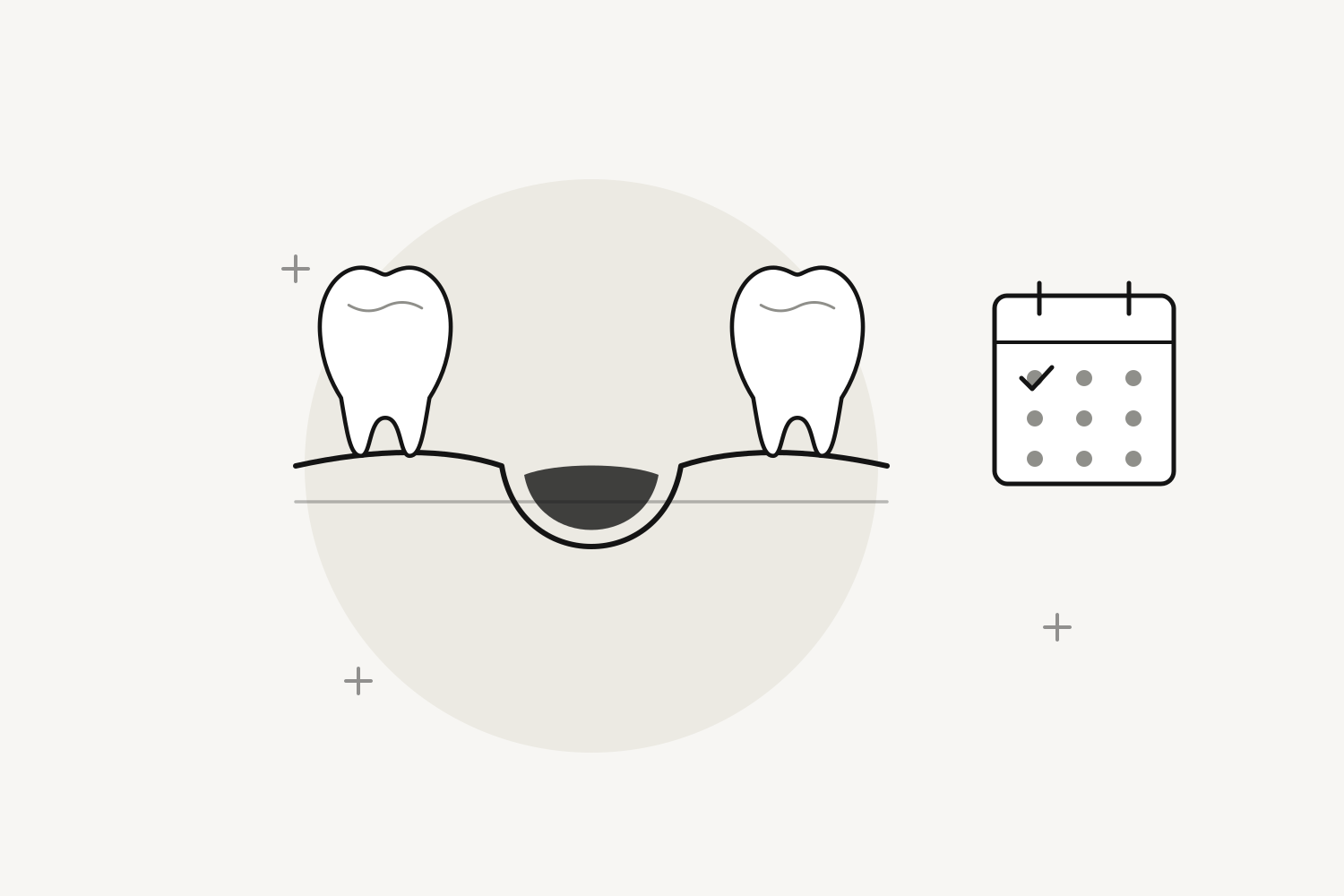
- At the time of extraction, an implant can sometimes be placed right away, or the socket can be grafted to preserve bone for an implant a few months later.
- Months or years later, the bone may have shrunk enough that a bone graft before the implant is needed, which adds a healing stage.
- After teeth have shifted, the space may need to be managed before a replacement fits well.
If you are about to have a tooth removed, it is worth asking about replacement before the extraction rather than after. Our guide to extraction aftercare and dry socket covers the healing side.
Your replacement options
There are three main ways to replace a missing tooth:
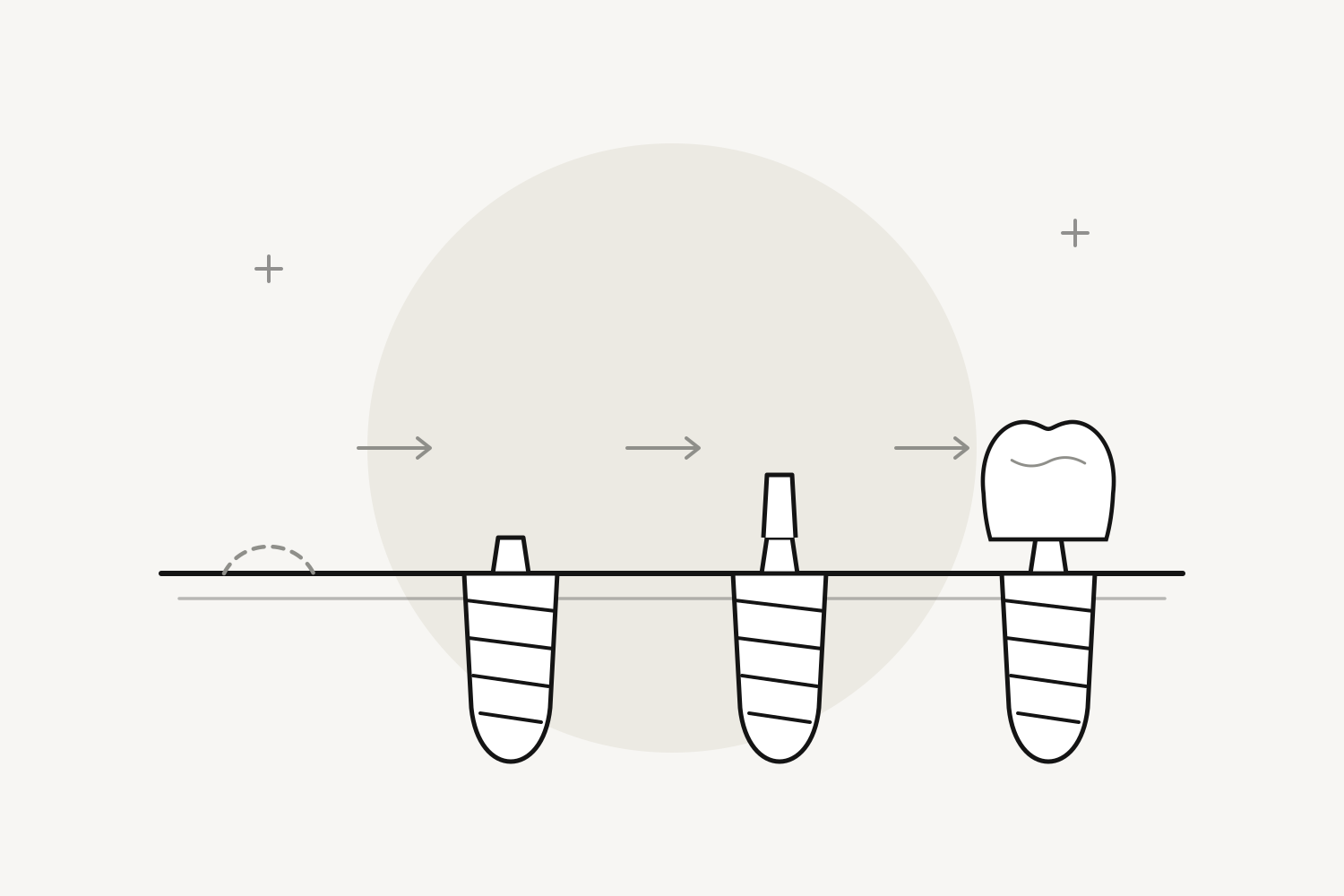
- A dental implant replaces the root as well as the tooth, which is what helps preserve the bone, and it does not involve the neighboring teeth. Our article on the dental implant process and timeline explains each step.
- A fixed bridge uses the teeth on either side as supports for a replacement tooth in between. It requires reshaping those neighboring teeth.
- A removable partial denture clips onto the remaining teeth. It is the simplest and least expensive option, though it does not replace the root.
We compare all three side by side in implants, bridges, or dentures. The right answer depends on your bone, the health of the neighboring teeth, your general health, and what matters most to you.
Tooth replacement in Hauppauge, NY
A missing tooth is rarely an emergency, but it is also rarely a problem that stays the same size. Knowing what is happening in the gap lets you choose when and how to replace it, rather than having the choice narrowed for you.
Our implant and oral surgery team and prosthodontists work together under one roof in Hauppauge, so planning, surgery, and the final tooth are coordinated from the start. If you live in Hauppauge, Smithtown, Commack, Islandia, or anywhere on Long Island, call us at (631) 360-0266 or request an appointment online to talk through your options.
Frequently asked questions
Is it bad to leave a missing tooth gap?
Over time, yes. Without a tooth root to stimulate it, the jawbone in that spot gradually shrinks. The neighboring teeth can tilt into the space and the opposing tooth can drift out of its socket toward the gap, which changes your bite and makes those teeth harder to clean.
Do teeth really shift after a tooth is removed?
They can. Teeth are held in place partly by their neighbors and the teeth they bite against. When one is missing, the teeth beside the gap may tip into it, and the tooth above or below can slowly over-erupt. The movement is gradual, which is why many people do not notice it until it affects their bite.
How long can I wait to get a dental implant after an extraction?
There is no single deadline, but bone is generally at its best close to the time of extraction. Sometimes an implant can be placed the same day the tooth is removed, sometimes the site is grafted and allowed to heal first. The longer a gap is left, the more likely bone grafting will be needed before an implant.
Does a missing back tooth matter if no one can see it?
Yes. Back teeth do most of the chewing, and losing one shifts that work onto the remaining teeth. The bone loss and tooth movement happen whether or not the gap is visible.
What are my options for replacing a missing tooth?
The main options are a dental implant, a fixed bridge supported by the neighboring teeth, or a removable partial denture. An implant is the only one that replaces the root, which is what helps preserve the bone. The right choice depends on your bone, your neighboring teeth, your health, and your preferences.
More from the journal
Book your visit.
New patients, families, and referrals are always welcome.