
How Long Does a Dental Implant Take? The Implant Process, Step by Step
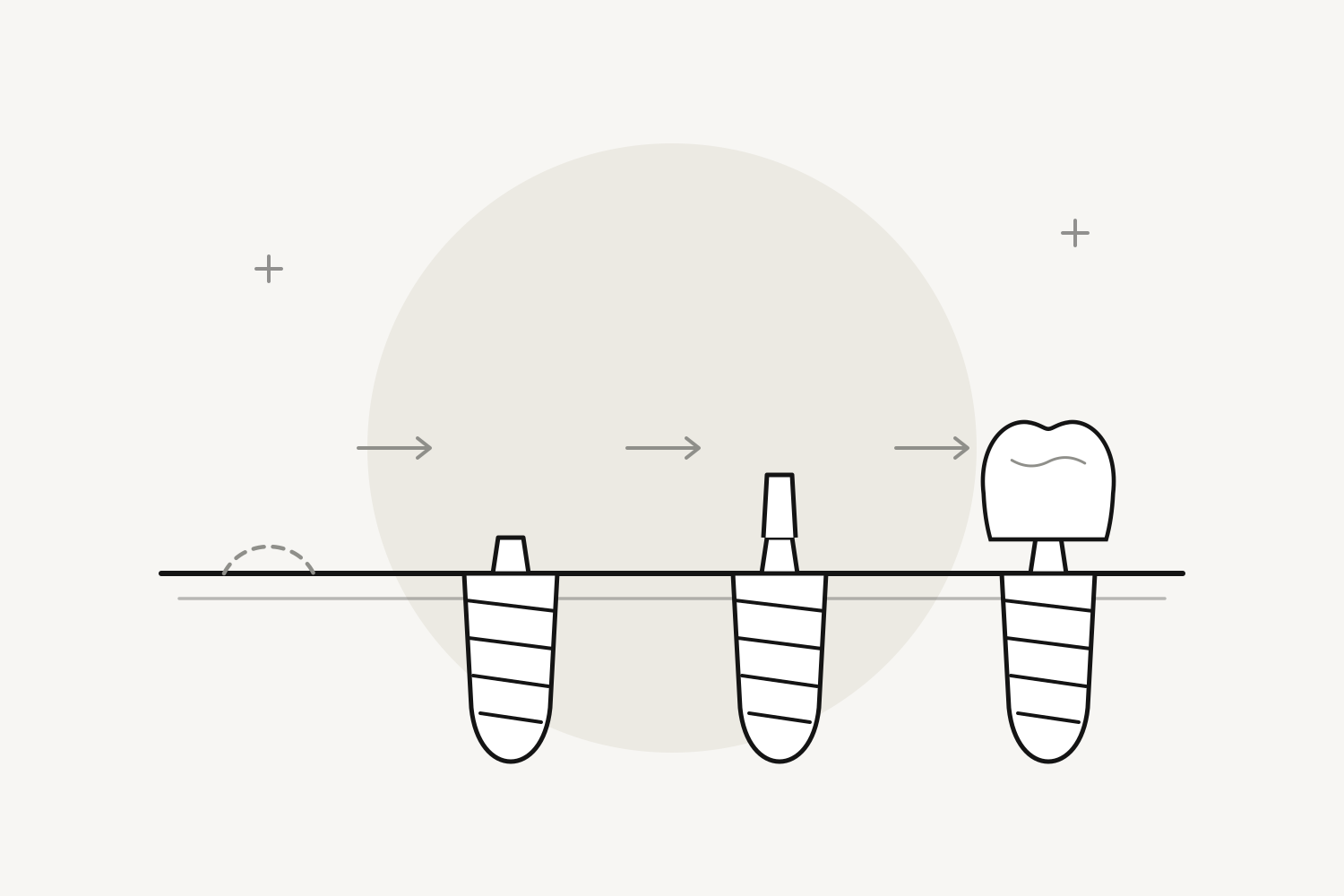
Most people asking about dental implants want to know two things before anything else: whether it will hurt, and how long it takes. The honest answer to the second question is that the surgery is short and the healing is not, and almost all of the time between the first visit and the finished tooth is your own bone doing its work.
Here is every step of the dental implant process for a single tooth, roughly how long each stage takes, and what makes a timeline shorter or longer. For replacing a full arch of teeth, the process is different, and our article on full-arch restoration covers it.
What is a dental implant?
A dental implant replaces the root of a missing tooth. A small titanium post is placed in the jawbone, the bone bonds to it, and a crown is attached on top. Because it is anchored in bone rather than resting on the gum or leaning on neighboring teeth, it looks, feels, and chews most like a natural tooth, and it helps keep the bone around it from shrinking. If you are still deciding between options, read implants, bridges, or dentures first.
Step 1: Consultation and 3D imaging
Everything starts with an exam and a CBCT scan, a 3D X-ray that shows the exact height, width, and density of the bone, along with the nerves and the sinus. This is what decides whether an implant can be placed straight away, whether grafting is needed first, and which size and position of implant will support the crown best.
We also review your health history and medications, since conditions such as uncontrolled diabetes and habits such as smoking affect healing.
Time: one visit. You leave with a plan, a timeline, and a cost.
Step 2: Removing the tooth, if it is still there
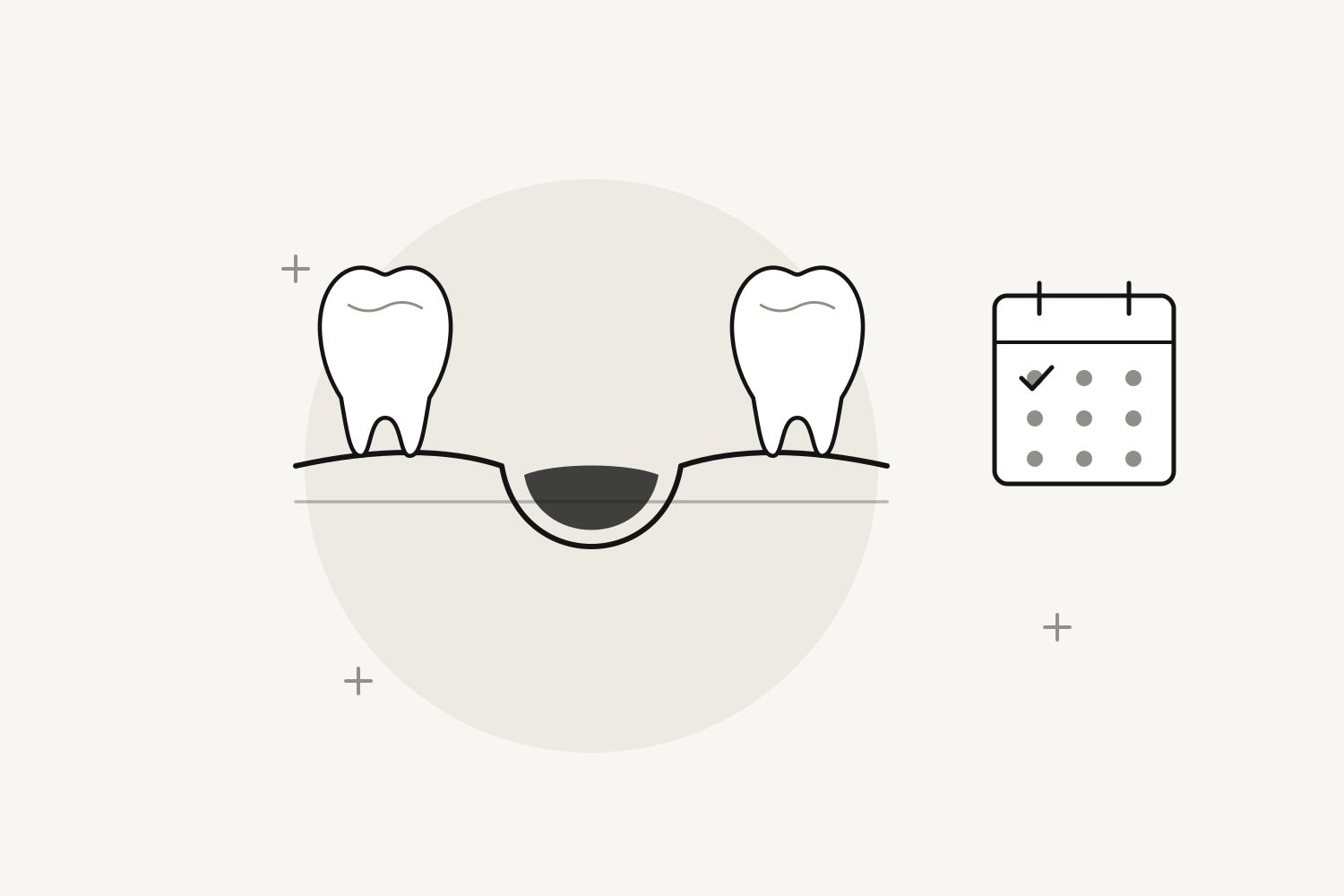
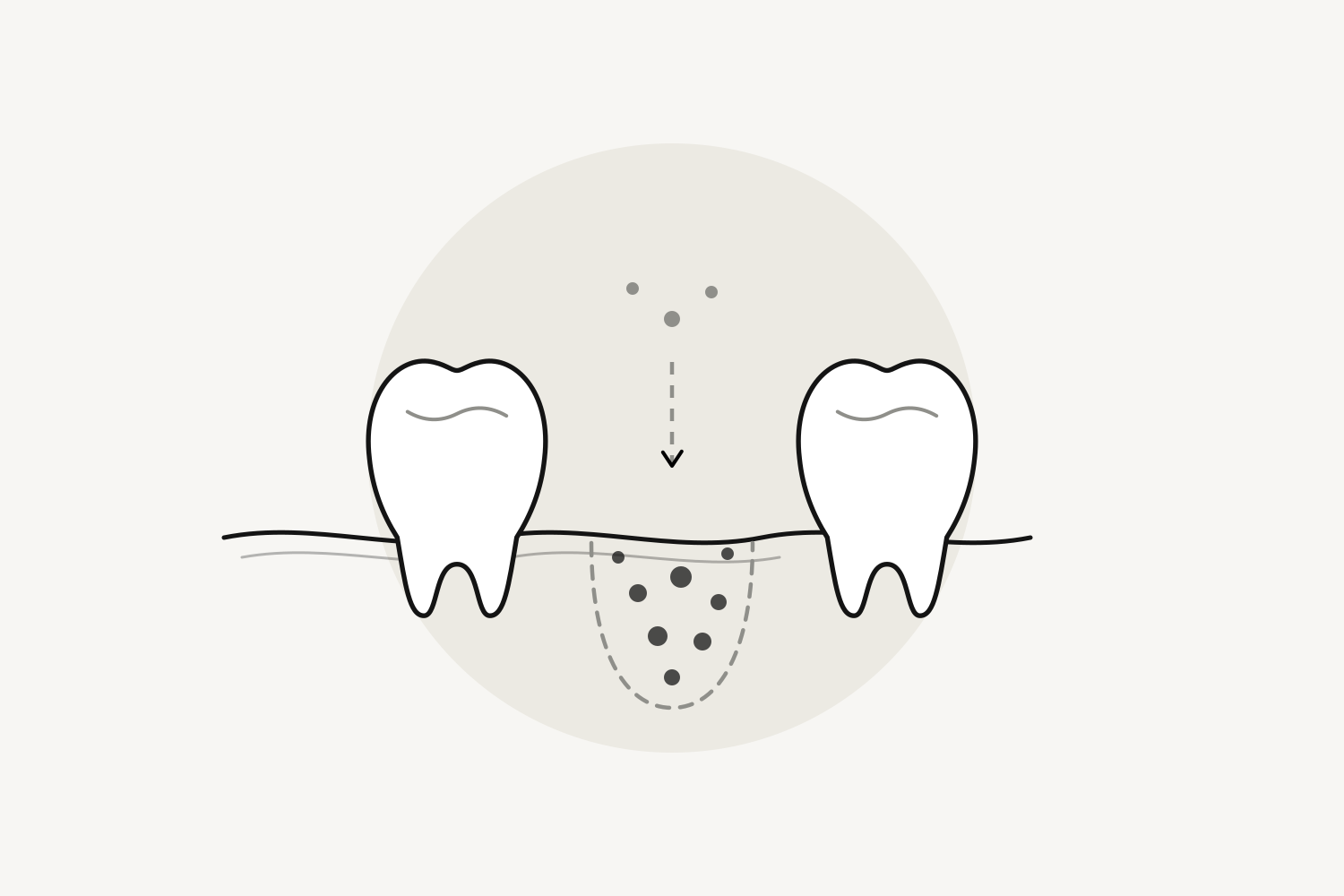
If the tooth has not been lost yet, it comes out first. Where the socket is healthy, the implant can sometimes go in at the same visit. Where it is not, the socket is often filled with a bone graft at the time of the extraction to preserve the ridge, and the site heals before the implant is placed.
Time: the extraction is one visit. If the implant is not placed at the same time, healing usually takes around two to four months.
Step 3: Bone grafting, if needed
When a tooth has been missing for a while, the bone in that area shrinks. If there is not enough left to hold an implant securely, it is rebuilt first. A small graft can sometimes be done at the same visit as the implant; a larger one, or a sinus lift for an upper back tooth, is done first and allowed to heal. Our article on bone grafting before an implant explains this step in detail.
Time: anywhere from none at all to several months, depending on how much bone needs rebuilding.
Step 4: Placing the implant
The implant is placed in a short procedure, typically around an hour for a single tooth, under local anesthesia. Sedation is available for anyone who wants it, and at our office it is administered by board-certified MD anesthesiologists. Read our guide to sedation dentistry if that part concerns you.
Most patients describe the next few days as sore rather than painful, with mild swelling that peaks around the second or third day.
Time: one visit, with a few days of recovery.
Step 5: Healing and osseointegration
This is the long part, and it cannot be rushed. Over the following months, bone grows directly onto the implant’s surface until the two are effectively a single structure, a process called osseointegration. That bond is what lets an implant handle a lifetime of chewing.
You are not left with a gap in the meantime. Depending on where the tooth is and how stable the implant is, you may have a temporary tooth attached to the implant, a removable temporary, or a temporary bonded to the neighboring teeth.
Time: typically three to six months. The lower jaw tends to heal faster than the upper, and grafted bone takes longer than native bone.
Step 6: The abutment and the final crown
Once the implant has integrated, a connector called an abutment is attached, and the area is scanned digitally. No goopy impression trays are needed.
The crown is designed and made in our own in-house laboratory, down the hall from the treatment room. That shortens the wait considerably compared with sending the case out, and it means the shade, the shape, and the bite are checked by the same team that placed the implant.
Time: usually one to two visits.
Can a dental implant be done in one day?
Sometimes, and it is worth understanding what “same day” means. In the right case, the tooth can be removed, the implant placed, and a temporary tooth attached in a single visit. What cannot happen in one day is osseointegration, so the final crown still comes a few months later.
Whether this is right for you depends on bone quality, the absence of infection, and how firmly the implant is held on the day it is placed. A good surgeon will tell you honestly if waiting is the safer path.
What makes the timeline longer or shorter?
Shorter: healthy bone, no infection, a tooth that can be removed cleanly, and a site where an implant can be placed immediately.
Longer: significant bone loss, a sinus lift, active gum disease that needs treating first, smoking, uncontrolled diabetes, and some medications that affect bone. None of these necessarily rule out an implant. They change the order of steps and the time between them.
How to care for an implant once it is finished
An implant cannot decay, but the gum and bone around it can become inflamed if plaque is left to build up, so it needs the same daily cleaning as a natural tooth, plus regular checkups. Our article on caring for dental implants covers what to do.
Dental implants in Hauppauge, NY
The fastest way to an accurate timeline is a consultation with 3D imaging, which replaces general figures with ones specific to your mouth. Surgery, sedation, restoration, and the laboratory are all under one roof here, so the steps stay coordinated from the first scan to the final crown.
If you are on Long Island, in Hauppauge, Smithtown, Commack, Islandia, or elsewhere in Suffolk County, call us at (631) 360-0266 or request a consultation online, and our implant and oral surgery team will lay out exactly what your implant will involve and how long it will take.
Frequently asked questions
How long does the whole dental implant process take?
For a single implant with healthy bone, most people go from placement to final crown in roughly three to six months, most of which is healing time while the implant bonds to the bone. If the tooth needs to be removed first or bone grafting is needed, add several months. Your surgeon will give you a timeline specific to your case after imaging.
Is getting a dental implant painful?
The placement itself is done under local anesthesia, and sedation is available, so most people feel pressure rather than pain. Afterward, most patients describe soreness for a few days that is managed with over-the-counter pain relief, and many find it easier than they expected, often easier than the extraction that came before it.
Can I get a dental implant the same day my tooth is pulled?
Sometimes. When there is enough healthy bone and no active infection, an implant can be placed into the socket at the same visit as the extraction. Whether a temporary tooth can also be attached that day depends on how stable the implant is. Imaging and an exam decide whether same-day placement is a safe choice for you.
What is osseointegration?
Osseointegration is the process of bone growing directly onto the surface of the titanium implant until the two act as one structure. It is what makes an implant strong enough to chew on, and it typically takes three to six months depending on bone quality, location in the mouth, and whether grafting was needed.
Will I be without a tooth while the implant heals?
Usually not. Depending on where the tooth is and how stable the implant is, options include a temporary tooth attached to the implant, a removable temporary, or a temporary bonded to the neighboring teeth. A front tooth is almost never left as a visible gap.
More from the journal
Book your visit.
New patients, families, and referrals are always welcome.