
Teeth Grinding: The Damage You Sleep Through
Most people who grind their teeth do not find out from themselves. They find out from a dentist holding a mirror, pointing at edges that used to have shape and are now flat.
Grinding happens in the parts of sleep nobody remembers. It leaves no bruise and usually no morning pain worth mentioning. What it leaves is wear, and wear accumulates quietly for years before it announces itself as a cracked molar, a filling that will not stay put, or a front tooth that has gone translucent at the tip.
Bruxism, the clinical name for grinding and clenching, is one of the most destructive things that happens to teeth, and it is one of the few where the damage is almost entirely preventable even when the habit itself is not. Here is how to tell whether you have it, what it is actually doing, and what stops it.
Why it hides so well
Two things keep grinding invisible. The first is that it mostly happens while you are asleep, so there is nothing to notice. A partner may hear it, but plenty of clenching is silent, all pressure and no sound.
The second is that enamel wears evenly. A tooth that loses a fraction of a millimeter a year does not look damaged at any point along the way. It looks like a slightly shorter version of itself. Compare a photograph from ten years ago and the difference is obvious; look in the mirror this morning and there is nothing to see.
That is why this is usually caught at a routine exam rather than by the person living with it. Wear facets, the polished flat spots where opposing teeth have been grinding against each other, are unmistakable to someone who looks at teeth all day.
What grinding actually does
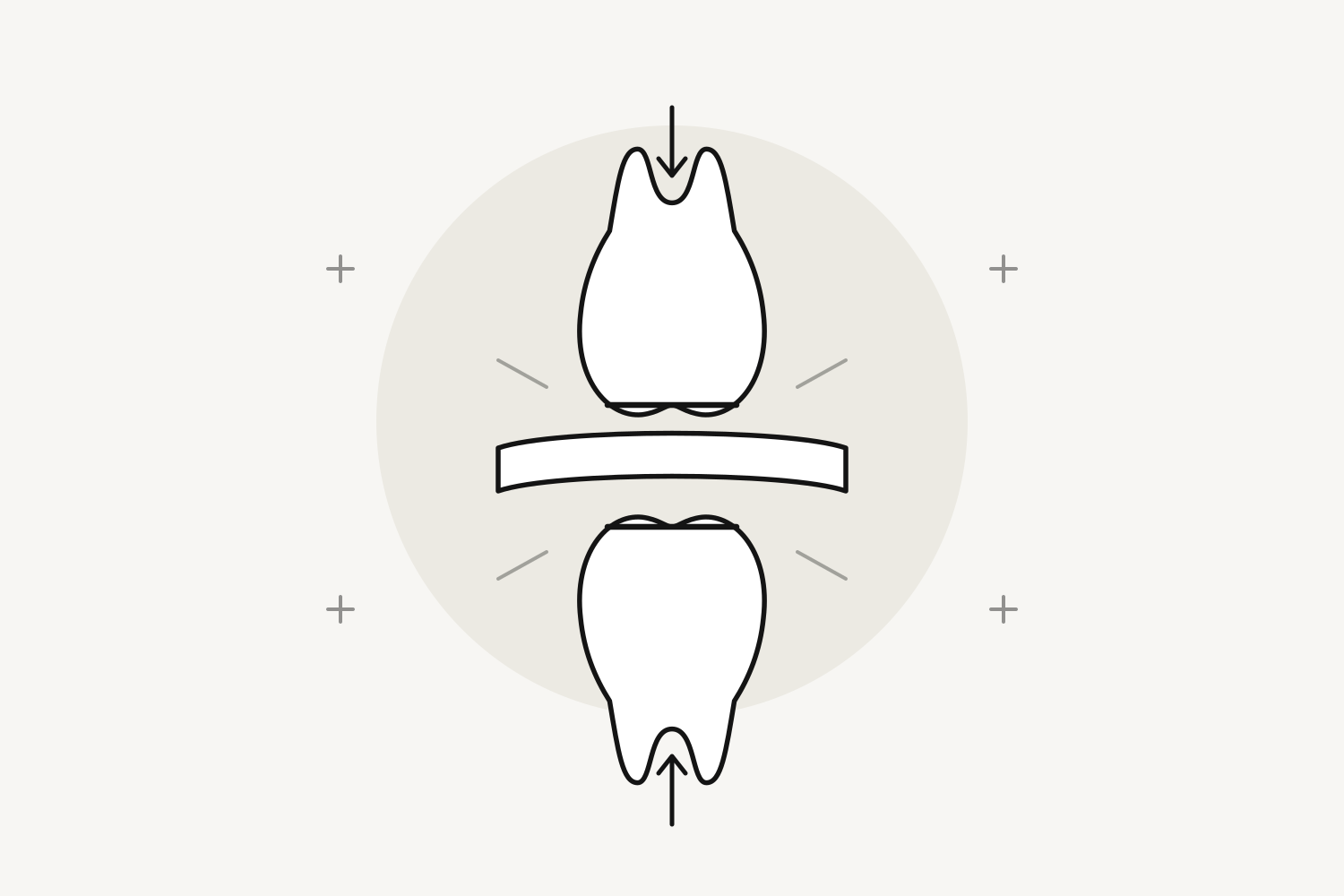
The force is the problem. Chewing applies real pressure, but only in short bursts, and you stop when something is hard or sharp. Sleep clenching has no such brake. It applies more force than you could deliberately produce while awake and holds it, sometimes for minutes at a time, several times a night.
Enamel wears away and does not come back. Enamel is the hardest tissue in the body, and it is also the only one your body cannot rebuild. Once the flat spots appear, the yellower dentin underneath is closer to the surface, which is why worn teeth look darker as well as shorter, and why they turn sensitive.
Teeth crack. The classic sign is a sharp jolt when you bite down on something and release, in one specific spot, that comes and goes. Cracks start in enamel and travel. Caught early, a crown protects the tooth. Left long enough, a crack can reach the nerve or split the root, and then the tooth cannot be saved.
Dental work fails early. Fillings loosen, porcelain chips, crowns come off. If the same restoration in the same tooth keeps failing, grinding is the first thing to rule out, because no repair outlasts the force that broke the original.
Gums recede and notches appear at the gum line. The repeated sideways flexing at the neck of the tooth stresses the tissue and bone that hold it. Recession that shows up on one side of the mouth, on the teeth you grind hardest, is often a bite problem wearing a gum problem’s clothes. It is one of the reasons our periodontal team asks about grinding before treating recession, since a graft placed over an unaddressed cause is a repair waiting to be undone.
The jaw muscles complain. Morning tightness, a dull ache in front of the ear, temple headaches that are worst on waking, a jaw that clicks or feels tired by the afternoon. The masseter muscles can visibly thicken over years of overuse.
The signs worth acting on
You do not need a diagnosis to notice most of these. Waking with a sore jaw or a headache at the temples. Teeth that look shorter, flatter, or more see-through at the edges than they used to. New sensitivity to cold. A tooth that hurts sharply when you bite in one particular way. Chips in the edges of front teeth. Ridges along the inside of your cheek, or scalloped indentations along the edges of your tongue, both of which come from pressing tissue against teeth. Restorations that keep failing.
Awake clenching is worth watching for separately. Notice where your jaw is right now. At rest, teeth should be slightly apart with lips together. If you have just caught yourself with your teeth touching, that is a habit you can start unlearning today.
Why people grind
There is rarely one cause. Stress and anxiety are the most familiar contributor, and the one people recognize in themselves, though grinding continues in plenty of calm lives too. A bite that does not meet evenly makes it worse, because the muscles keep searching for a comfortable position and never quite find one.
Caffeine, alcohol, and nicotine all worsen sleep bruxism. Some medications, particularly certain antidepressants, list it as a side effect. Reflux is associated with it as well.
The association that matters most clinically is with sleep-disordered breathing. Grinding often travels with snoring and obstructive sleep apnea, and the two share a pattern of arousal during the night. If you grind and you also snore heavily, wake unrefreshed, or have been told you stop breathing in your sleep, that is worth raising with a physician. A night guard protects your teeth; it does not treat a breathing problem, and the breathing problem is the more serious of the two.
What actually stops the damage
A custom night guard, first. This is the treatment that does the most, fastest. A guard made from an impression or scan of your own teeth sits precisely, distributes the force across every tooth instead of the two or three taking the brunt, and gives the enamel something to wear through that is not enamel. It does not stop you grinding. It moves the damage onto a piece of acrylic that can be replaced for a fraction of what a crown costs.
The drugstore version is not the same thing. Boil-and-bite guards are bulky, they fit approximately, and a guard that fits approximately gets pushed around at night or spat out. Soft guards in particular give many people something satisfying to chew, and they clench into them harder rather than less. A guard that shifts can also let teeth move over time, which is its own problem. If cost is the reason for the drugstore option, say so at the appointment, because the arithmetic against a single cracked molar rarely favors it.
Fixing what the bite is doing. Where teeth genuinely do not meet evenly, adjusting the contacts so the force spreads across the arch takes strain off the specific teeth absorbing it. This is careful, conservative work, measured before anything is touched.
Rebuilding what is already worn. Once teeth have lost significant height, the repair is more than cosmetic. Restoring worn teeth means restoring the vertical relationship between the arches, and that is planned as one case rather than tooth by tooth. Our prosthodontic team handles these, and our in-house laboratory builds the restorations, so the design and the fit stay in the same hands. Where the wear is limited to the front teeth, conservative cosmetic treatment can restore the shape, but only once the grinding is under control.
Working on the cause where there is one to work on. Cutting evening caffeine and alcohol, treating reflux, addressing sleep quality, and managing stress all reduce the intensity. None of them is quick, and none of them removes the need for the guard in the meantime.
Have it looked at before it cracks something
Grinding is not an emergency. That is exactly the problem with it: nothing forces the issue until a tooth splits, and by then the conversation is about saving it rather than protecting it.
If your jaw is sore in the mornings, your teeth look shorter than they used to, or the same filling keeps failing, ask to have the wear pattern examined. It takes a few minutes at a regular checkup, and the answer is usually either reassurance or a night guard.
Call us at (631) 360-0266 or request an appointment online, and we will look at the wear, the bite, and the gums together at our Hauppauge office, and tell you plainly whether this needs treating now or watching.
More from the journal
Book your visit.
New patients, families, and referrals are always welcome.