
Veneers, Bonding, or Whitening: Choosing the Right Cosmetic Treatment
Most people arrive at a cosmetic consultation having already picked a treatment. They have seen porcelain veneers on social media, or a friend had professional teeth whitening, and they ask for it by name. That is a reasonable place to start, but it skips the question that decides whether the result will make you happy: what is actually wrong with the tooth?
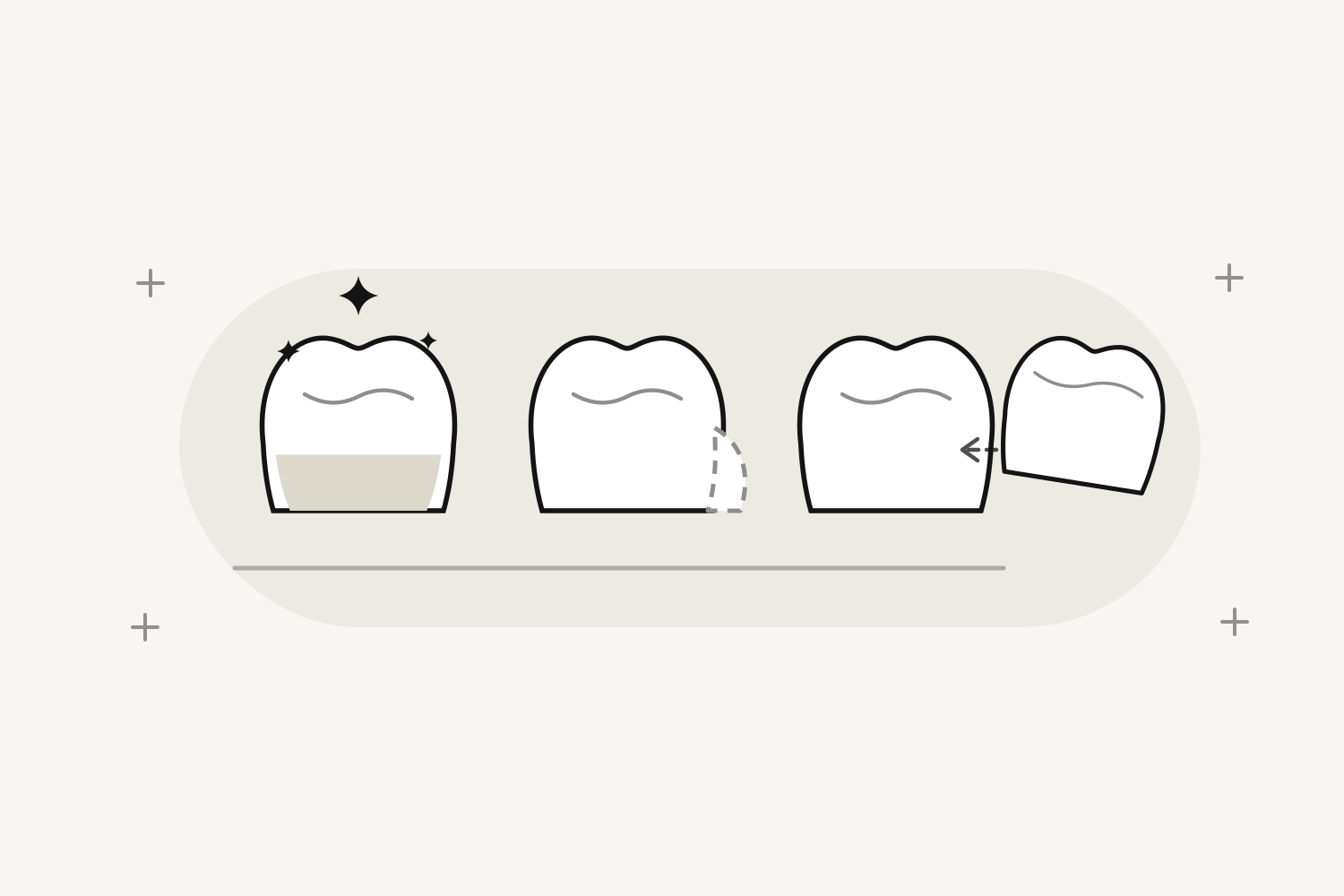
Teeth whitening, dental bonding, and porcelain veneers solve genuinely different problems. Whitening changes color and nothing else. Bonding changes shape and repairs small damage. Veneers replace the entire visible surface. Choosing the wrong one produces a result that is technically well done and still disappointing, which is the most common complaint we hear from patients who had cosmetic dentistry somewhere else and came to us to have it revised.
Here is how we sort it out at our cosmetic dentistry practice in Hauppauge, and how to think about it before you ever sit in the chair.
Start with why the tooth looks the way it does
Cosmetic dentistry is diagnosis first. A gray tooth and a yellow tooth look like the same problem to a patient and are not remotely the same problem to a dentist.
Yellowing across all your teeth is usually surface and internal staining from coffee, tea, red wine, and time. That responds to whitening. A single dark tooth is often a tooth that had trauma or a root canal years ago, and no amount of external whitening will change it, because the discoloration is coming from the inside. A chalky white patch is frequently enamel fluorosis or decalcification, which sometimes gets more obvious after whitening rather than less. Gray banding across several teeth can be tetracycline staining from childhood antibiotics, which is famously stubborn.
Shape problems sort the same way. A small chip on one front tooth is a different case from teeth that are worn short across the whole arch, and worn teeth are frequently a bite problem wearing a cosmetic disguise. If grinding is what shortened them, cosmetic work placed on top of an untreated grinding habit will chip again. That is a restorative and occlusal conversation before it is a cosmetic one.
None of this is meant to complicate a simple request. It is meant to explain why the first visit involves photographs, X-rays, and a look at how your teeth meet, rather than a straight quote for veneers.
Professional teeth whitening: color only, and the cheapest place to start
Whitening is the least invasive cosmetic dental treatment available. Nothing is drilled, nothing is removed, and nothing is permanent. If you dislike the result, it fades.
In-office whitening uses a stronger peroxide gel with the gums carefully isolated, and produces a visible change in a single appointment. Custom take-home trays work more gradually over one to two weeks and tend to give a more controllable, longer-lasting result, because you can top up later using the same trays. Many patients do both: an in-office session to make the jump, then trays to hold it.
What it will not do: change the color of existing crowns, fillings, bonding, or veneers. Restorations are inert. Whiten your natural teeth and any older composite filling on a front tooth will suddenly stand out as darker, because it stayed exactly where it was. This is the single most useful thing to know before whitening, and it is the reason we whiten first and replace visible fillings afterward, never the other way around.
Sensitivity during whitening is common, temporary, and manageable with desensitizing gel and spacing out the sessions. It is not a sign of damage.
Dental bonding: shape and small repairs, in one visit
Bonding is tooth-colored composite resin sculpted directly onto the tooth and hardened with a curing light. It is done in a single appointment, usually with little or no anesthetic, and often with no removal of healthy enamel at all.
Bonding is the right answer for a chipped front tooth, a small gap between the two front teeth, a tooth that is slightly short or oddly shaped, or a notch at the gumline from years of aggressive brushing. It is reversible in a way veneers are not, which makes it a genuinely good choice for younger patients and for anyone who wants to see a shape change before committing to something permanent.
The honest trade-off is longevity and stain resistance. Composite is more porous than porcelain, so it picks up coffee and wine staining over the years and can dull slightly. Expect polishing along the way and eventual replacement, on a scale of years rather than decades. For many people that is a perfectly fair exchange for a conservative, same-day, lower-cost result.
Porcelain veneers: a full surface replacement, and a long-term commitment
A porcelain veneer is a thin shell of ceramic bonded to the front of the tooth. Because it replaces the entire visible surface, it can change color, shape, length, alignment, and proportion all at once. That is the reason veneers are what people picture when they picture a smile makeover.
Veneers are the right treatment when the problems stack up: discoloration that will not whiten, worn or uneven edges, small gaps, and mild crowding, all on the same teeth. Solving that combination with whitening plus bonding would mean fighting several battles at once and losing at least one.
They also carry the highest commitment of the three. Most veneers require some enamel reduction, and enamel does not grow back, so the tooth will need a veneer or a crown from then on. Porcelain resists staining far better than composite and holds its polish for a decade or more with reasonable care, but it can fracture, and an untreated grinding habit will find that weakness. Patients who clench get a night guard as part of the plan, not as an afterthought.
Because our restorations are designed and milled in our in-house dental lab, we shade-match veneers with the patient present rather than by mailing a shade tab across the country. Color in a photograph and color in daylight next to your own skin are not the same thing, and the difference is exactly what makes veneers look either natural or obvious.
Most smile makeovers are a combination
Real cases rarely resolve to a single treatment. A common plan looks like this: whiten the natural teeth first, let the shade settle for a couple of weeks, then bond the small chips and replace the old front fillings to match the new brighter shade, and place veneers only on the two or three teeth that genuinely need them. That sequence costs less than veneering everything, keeps more of your natural enamel, and looks more like a real smile, because real smiles are not eight identical rectangles.
Sequence matters as much as selection. Whitening comes before any tooth-colored work. Gum health comes before cosmetic work of any kind, because a veneer margin sitting against inflamed, bleeding tissue will never look right and will not stay sealed. If teeth are significantly crowded, moving them is often cheaper and far more conservative than grinding them down to fake straightness with porcelain.
What a cosmetic consultation looks like here
We photograph your smile, take the images we need, check how your teeth come together, and look at gum health before discussing a single treatment. Then we talk about what bothers you specifically, in your own words, because “I hate my smile” and “my one front tooth is darker than the other” lead to very different plans.
You leave with the options, what each one changes, what it does not change, roughly how long it lasts, and what it costs. Nothing gets started that day.
If you have been considering veneers, whitening, or bonding anywhere on Long Island, and you would rather understand the choice than be sold one, call us at (631) 360-0266 or request a consultation online. Our cosmetic, restorative, and periodontal teams sit in the same building in Hauppauge, which means the plan you get accounts for all of it at once.
More from the journal
Book your visit.
New patients, families, and referrals are always welcome.