
When Dentures Stop Fitting: Relines, Rebases, and What Comes Next
The complaint usually arrives sideways. Someone mentions they have started avoiding certain foods, or that they have gone from a dab of adhesive to a full tube a week, or that the lower one has begun to lift when they laugh.
Almost nobody comes in and says their denture no longer fits, because most people assume that is simply what dentures become. It is not. A denture that has loosened is telling you something specific about the bone underneath it, and in most cases the fix is far smaller than a new denture.
Here is what changes, what each of the repairs actually does, and when the honest answer is that a better fit is not the goal any more.
Why a denture that fit stops fitting
The denture is not what changed. The ridge is.
Bone in the jaw exists to hold teeth. It is maintained by the forces that travel down through the roots into it every time you chew, and when the roots are gone that stimulus goes with them. The body reabsorbs bone it is no longer using. This starts immediately after teeth are lost, moves fastest in the first year, and then continues slowly for the rest of a person’s life.
A denture rests on that ridge and gets its grip from close contact with it. As the ridge flattens and narrows, the denture keeps its original shape while the surface it was molded to shrinks away underneath. The fit loosens gradually, and because it happens over years, most people adapt to it without ever registering a single moment when it got worse.
Wearing a denture speeds this up slightly, since chewing pressure is now delivered straight onto the ridge rather than through roots. It is not a reason to avoid dentures, but it is the reason a denture is not a fit-once appliance.
The signs it has gone further than you think
Reaching for more adhesive, more often. Sore spots that keep coming back in the same place, or new ones appearing where there were none. Food working its way underneath, particularly with the lower denture. Having to think about how you chew, or quietly dropping foods from your diet. Clicking when you talk, or a change in speech. A lower denture that lifts when you yawn or laugh.
Two more are worth watching for because they creep up. The first is a change in the face: as bone height is lost and the teeth wear down, the distance between nose and chin shortens, the lips lose their support, and the corners of the mouth fold inward. That folding can leave persistent cracking at the corners. The second is the burden shifting to the other jaw, where the natural teeth opposing a loose denture start absorbing more work than they should.
None of these are things to live with, and none of them get better on their own.
Reline, rebase, or remake
These get used interchangeably in conversation and they are three different procedures.
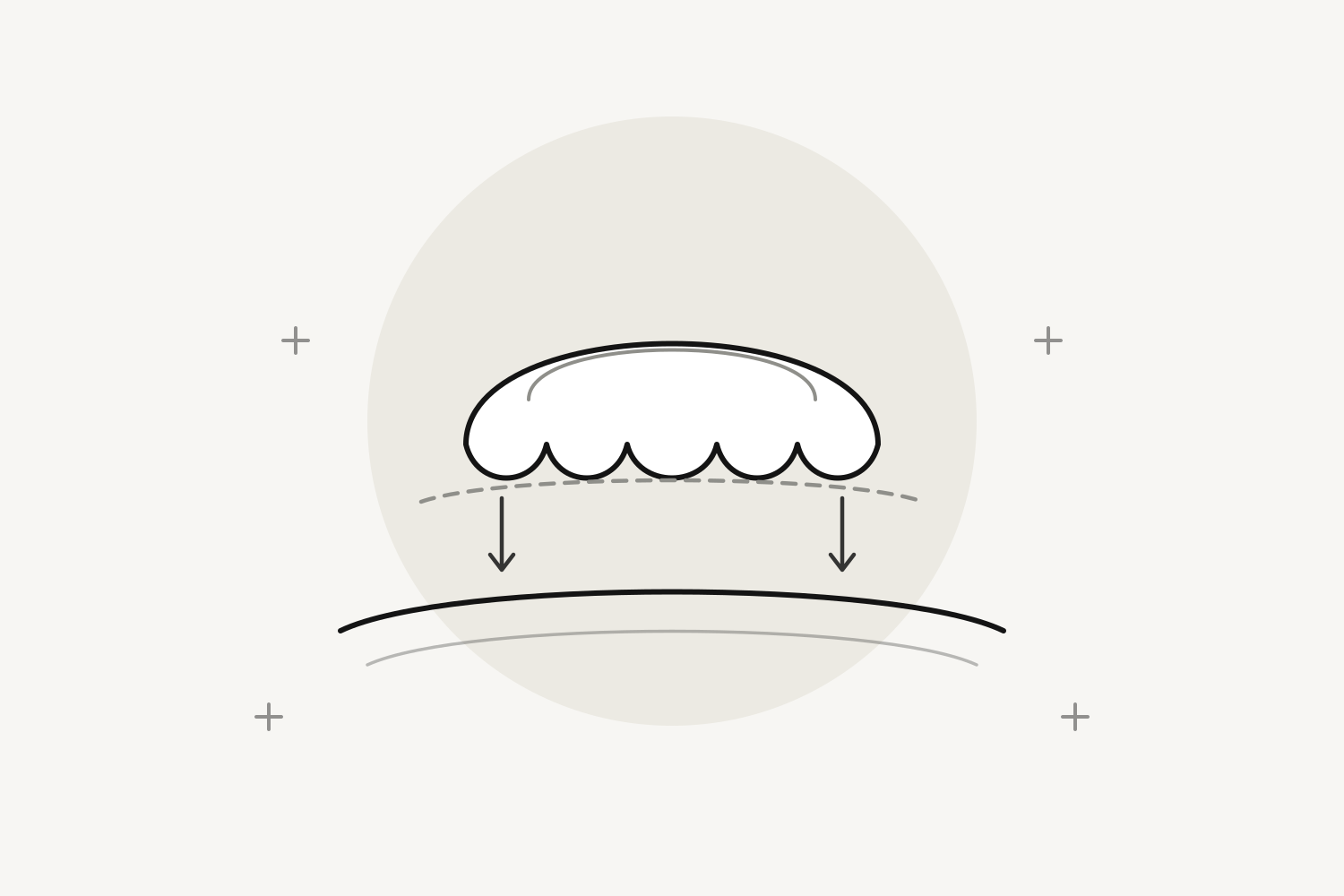
A reline resurfaces the tissue side of the denture so it matches the ridge as it is today. The teeth, the shape, and the appearance all stay exactly as they are; only the fitting surface is renewed. This is the most common answer by a wide margin, and for most wearers it is needed every few years.
A hard reline uses the same acrylic the base is made of and lasts the longest. A soft reline uses a cushioning material and is chosen when the tissue underneath is tender, thin, or newly healed. There is also a chairside version that can be done in one visit when the situation calls for it, though a laboratory-processed reline is more accurate and more durable.
A rebase replaces the entire acrylic base and keeps the existing teeth. It is the right call when the teeth are still in good condition but the base itself has aged, discolored, been repaired several times, or been relined more than it should have been.
A remake is a new denture. This is the answer when the teeth themselves are worn flat, when the bite has collapsed enough that the vertical dimension needs re-establishing, or when relining would build the base so thick that it becomes bulky and unstable. Dentures are not permanent appliances; most need replacing somewhere in the range of five to ten years, and a denture that is twenty years old is almost certainly working against you regardless of how attached to it you are.
Adhesive is a symptom, not a repair
There is nothing wrong with denture adhesive. Used lightly with a well-fitting denture, it adds confidence and it is entirely reasonable.
The trouble is that it works well enough to disguise the underlying change. Steadily increasing adhesive to hold a denture that no longer matches the ridge means chewing pressure is landing on the areas the denture happens to be touching rather than spreading across the whole ridge, and concentrated pressure accelerates the bone loss that caused the problem. It also produces the recurring sore spots people usually blame on the adhesive.
If you have gone up a tube in usage, that is the signal to have the fit measured, not to buy a stronger brand.
One related point: do not adjust a denture yourself. Filing a sore spot at home removes material that was carrying load, and the relief is almost always temporary while the fit gets worse permanently. A chairside adjustment for a genuine pressure point takes minutes.
When implants change the equation
For some people, and particularly for lower dentures, better fit is not the ceiling worth aiming for. The lower jaw has less surface area and a tongue moving against the denture all day, which is why lower dentures are so much harder to keep stable than upper ones. There is a point past which no reline makes a flat lower ridge hold a denture well.
Implants change the mechanics rather than improving them. Because they integrate with the bone, they also give the bone something to work against again, which slows the resorption in that area.
An implant-supported overdenture is the smaller step. A small number of implants, sometimes as few as two in the lower jaw, hold a denture that still comes out for cleaning but now snaps firmly into place. For a great many patients this is the single biggest change in comfort available to them, and it does not involve replacing the whole approach.
A fixed full-arch restoration does not come out at all. The teeth are secured to implants and stay put, cleaned in the mouth like natural teeth. It is a larger undertaking, and it is the right answer for some people and the wrong one for others. Our full-arch team plans these with the surgery, the prosthetics, and the laboratory work considered together from the start, because the final result is decided by where the implants go, and that has to be designed backward from the teeth rather than forward from the bone.
Neither option is right for everyone. Both need enough bone to work with, which is why a longstanding denture wearer is sometimes looking at grafting first, and why the assessment starts with imaging rather than with a recommendation.
Why the laboratory matters here
The practical objection to a reline is going without your teeth while the work is done. That is a real concern and not a small one.
Our restorations are designed and made in our own in-house laboratory, in the same building as the appointment. It shortens the turnaround on relines and rebases considerably compared with mailing a case out and waiting for it to come back, and when an adjustment is needed the technician who made it is down the hall rather than at the other end of a shipping label.
It also means the fit, the bite, and the appearance are assessed by the same team. A denture that fits well and looks wrong has not solved the problem.
Get the fit measured before it costs you bone
A loose denture is not just uncomfortable. It changes how you eat, and over time it accelerates the very bone loss that made it loose, which narrows the options available later. The people who end up with the fewest choices are usually the ones who managed with adhesive for a decade.
If your denture rocks, lifts, rubs, or has quietly changed what you eat, have it looked at. It may need nothing more than a reline.
Call us at (631) 360-0266 or request a consultation online, and our prosthodontic team at our Hauppauge office will assess the fit, the ridge, and the bite, and tell you which of these you actually need, including when the answer is that what you have is fine.
More from the journal
Book your visit.
New patients, families, and referrals are always welcome.