
Tooth Hurts When I Bite Down? Cracked Tooth Symptoms and Treatment
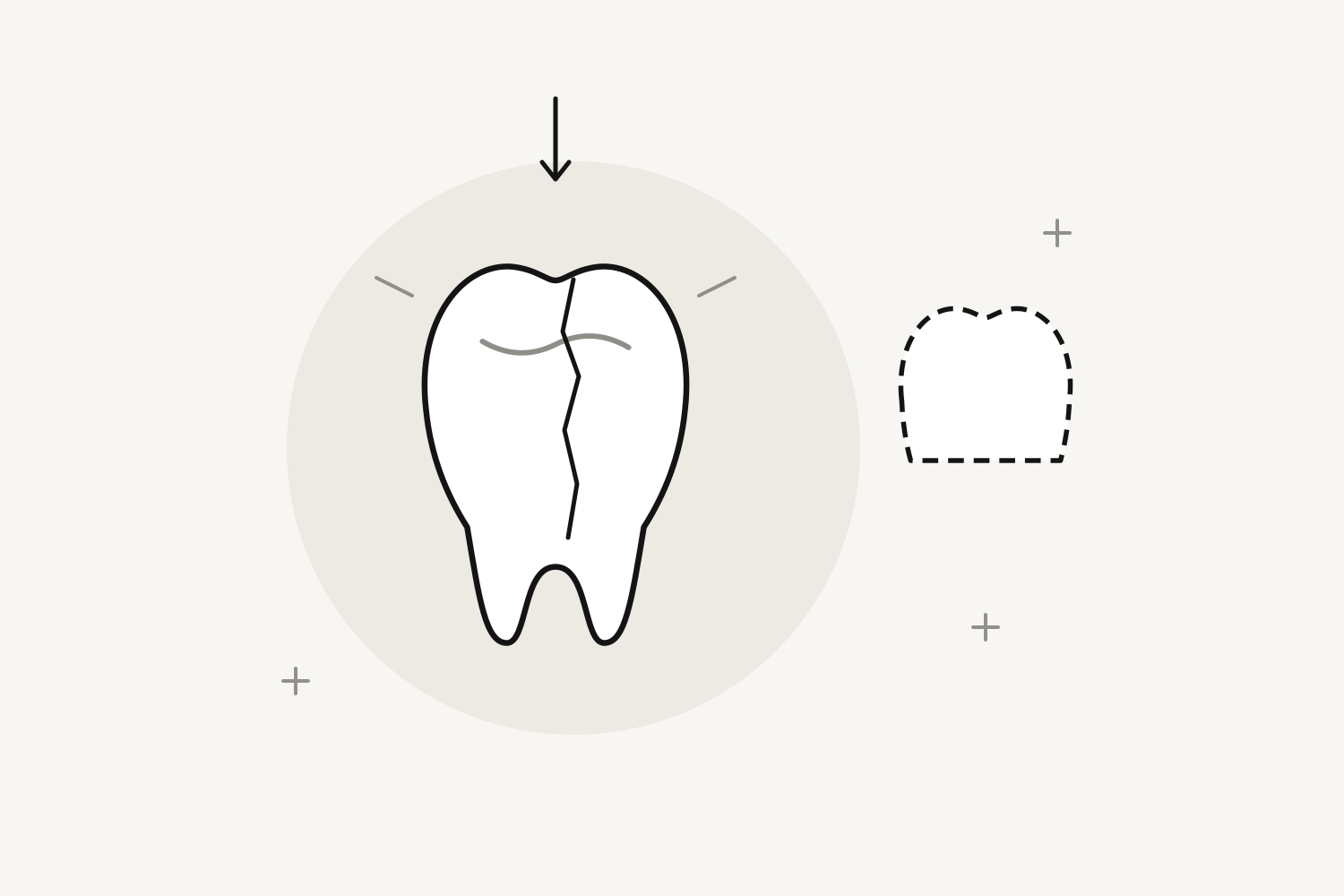
The description is almost always the same. A sharp pain when chewing something, on one side, sometimes only on one particular kind of bite. Then it is gone. You might go days without feeling it, and when you do, it is often hard to say exactly which tooth it came from.
Dentists call this pattern cracked tooth syndrome, and at our Hauppauge office it is one of the most common reasons a patient says a tooth hurts when they bite down. Many people quietly start chewing on the other side and leave it there. That is understandable, because there is nothing to see and the pain never sticks around. It is also how a small, very treatable crack becomes a tooth that cannot be saved.
Why does a cracked tooth hurt when you bite?
A tooth is not a solid block. When a fine crack runs through the enamel and into the dentin underneath, biting down pushes the two sides of the tooth apart very slightly. The fluid in the dentin moves, the nerve registers it, and you feel a sharp jolt.
A telling detail is that the pain often comes on the release, when you open after biting, rather than on the bite itself. That is the moment the two sides of the crack snap back together.
Cold sensitivity on that tooth is common too. What is usually missing is any lingering ache, swelling, or visible damage, which is exactly why a cracked tooth is so easy to dismiss.
How is a cracked tooth diagnosed?
Most cracks are invisible in a mirror and many do not show up on an X-ray, because an X-ray shows a crack only when the beam happens to line up with it. Patients are often frustrated to hear that nothing is showing, while the tooth keeps hurting.
Finding one takes a combination of things: asking you to bite on a small instrument one cusp at a time until the pain is reproduced, magnification, a bright light shone through the tooth so the crack interrupts it, checking the gum around the tooth for a narrow deep pocket, and sometimes removing an old filling to look at the tooth underneath. The pattern of your symptoms matters as much as any test, so the more precisely you can describe what sets it off, the faster we get there.
What causes a cracked tooth?
Cracks show up most often in back teeth, which take the most force. They are more likely in teeth with large fillings, since a big filling leaves thinner walls of natural tooth around it, and in people who grind or clench. Biting down on something unexpectedly hard is a common trigger: an olive pit, a popcorn kernel, a piece of bone, ice. Chewing ice is a habit worth breaking for exactly this reason.
Types of cracked teeth
Not every line on a tooth is a problem.
Craze lines are tiny surface lines in the enamel that almost every adult has. They are cosmetic, cause no symptoms, and need no treatment.
A fractured cusp is when one corner of the chewing surface breaks or cracks away, often around a large filling. It is usually very fixable because the crack does not reach the nerve.
A cracked tooth is a crack running from the biting surface down toward the root. This is the one that produces the classic pain on biting. Caught early, it is treatable and the tooth can be kept.
A split tooth is a cracked tooth that has gone all the way through, so the tooth has separated into two parts. At this stage, keeping the whole tooth is rarely possible.
A vertical root fracture starts in the root and works upward. It often causes few symptoms until the bone and gum around it become infected, and it usually means the tooth has to come out.
The reason to act early is that a cracked tooth can become a split tooth. Cracks rarely heal and they tend to travel, a little further with every chewing cycle.
Cracked tooth treatment options
A crown is the usual answer. It wraps the tooth and holds the two sides together so they can no longer flex apart under biting pressure, which is what stops the pain and stops the crack from spreading. Many patients notice the difference immediately. Because our crowns are designed and made in our own in-house laboratory, in many cases the tooth can be protected in a single visit rather than spending weeks in a temporary, which matters for a tooth that is actively cracked. Our piece on same-day crowns explains how that works.
An onlay covers and reinforces part of the tooth rather than all of it, and can be the right choice when the crack involves a single cusp and the rest of the tooth is strong.
Treatment inside the tooth is needed when the crack has reached the nerve and the nerve has become inflamed or infected. The signs are pain that lingers, pain that arrives on its own, or pain at night. The tooth is then treated and crowned.
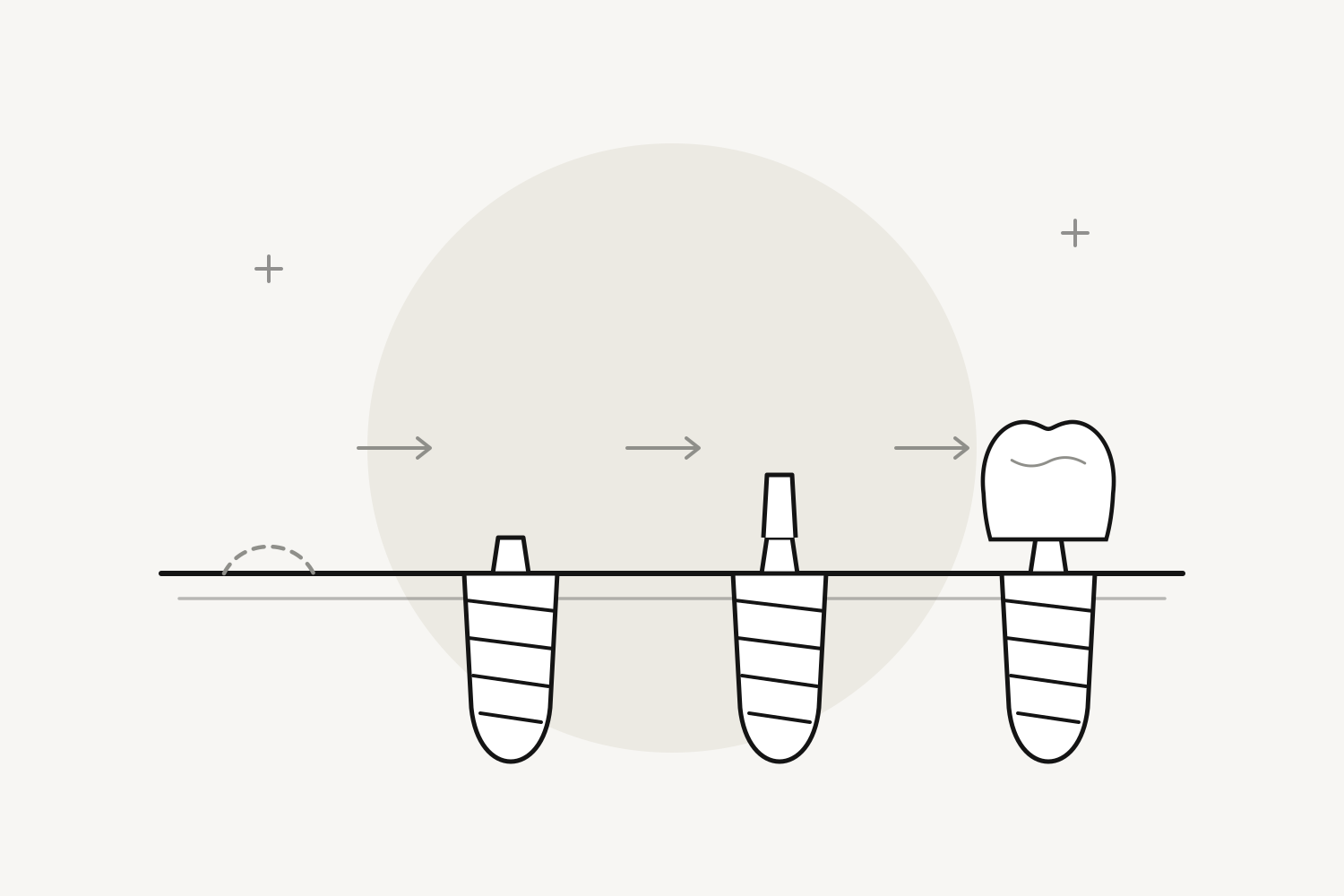
Removal is the answer when the crack runs too far below the gum or into the root. If it comes to that, the gap can be replaced with an implant, and our implant and oral surgery team can talk through the options. It is worth saying plainly that this is the outcome early treatment is trying to avoid.
What to do if you think you have a cracked tooth
Chew on the other side. Avoid very hard, very sticky, and very cold foods. If you clench or grind, be aware of it during the day and keep your teeth apart when you are not eating. Over-the-counter pain relief is fine if you need it. Do not wait for the pain to become constant before calling, because by then the crack has usually traveled.
If a piece of tooth breaks off, keep it and call. Our article on dental emergencies covers what can wait until morning and what should not.
Cracked tooth treatment in Hauppauge, NY
A crack found while it only hurts now and then is usually a crown and the end of the story. The same crack left for a year can mean losing the tooth. The single most helpful thing you can do is come in while the tooth is still in one piece.
If you are on Long Island, in Hauppauge, Smithtown, Commack, Islandia, or anywhere in Suffolk County, call us at (631) 360-0266 or request an appointment online, and our general and restorative team at our Hauppauge office will find the tooth, find the crack, and tell you exactly what it needs.
Frequently asked questions
Why does my tooth hurt when I bite down and then release?
Pain on releasing a bite is a classic sign of a cracked tooth. Biting pushes the two sides of the crack slightly apart, and when you let go they snap back together, moving the fluid inside the dentin and triggering a sharp, brief pain. The tooth often feels fine the rest of the time.
Can a cracked tooth heal on its own?
No. Unlike a broken bone, a cracked tooth does not heal, and cracks tend to spread a little further with chewing. Early treatment, usually a crown that holds the tooth together, stops the pain and protects the tooth from splitting.
Why didn't my cracked tooth show up on an X-ray?
Most cracks are too fine to see on an X-ray unless the beam happens to line up with the crack. Dentists diagnose cracked teeth with bite tests on individual cusps, magnification, a light shone through the tooth, gum pocket measurements, and your description of what triggers the pain.
How is a cracked tooth treated?
Most cracked teeth are treated with a crown, which wraps the tooth and stops the two sides from flexing apart. A crack limited to one cusp may only need an onlay. If the crack has reached the nerve, the tooth needs treatment inside before it is crowned, and a tooth split through the root usually has to be removed and can be replaced with an implant.
Is a cracked tooth a dental emergency?
A cracked tooth that hurts only now and then is not an emergency, but it should be seen soon because cracks spread. Call right away if a piece breaks off, the pain becomes constant or wakes you at night, or there is swelling, which can mean the nerve is involved.
More from the journal
Book your visit.
New patients, families, and referrals are always welcome.